Why is my AC blowing warm air?
The short answer: it's usually an airflow, power or thermostat problem, or a sealed-system fault such as low refrigerant or a failing compressor. This page covers central residential AC, so it applies whether yours is blowing warm, blowing hot, not blowing cold, or running with the fan on and no cooling. If you have a swamp cooler that blows warm, check the pads, pump and water supply instead.
The order below runs from free, safe checks to technician-only faults. You can rule out several causes in minutes, and you shouldn't guess at refrigerant first.
Phoenix systems also work harder than most. The city logged 113 consecutive days at or above 100°F in 2024, well past the old 76-day record from 1993.
What can I check myself in five minutes?
Work through these in order. None of them requires tools or opening anything.
- Set the thermostat to Cool, a few degrees below room temperature, with the fan on Auto.
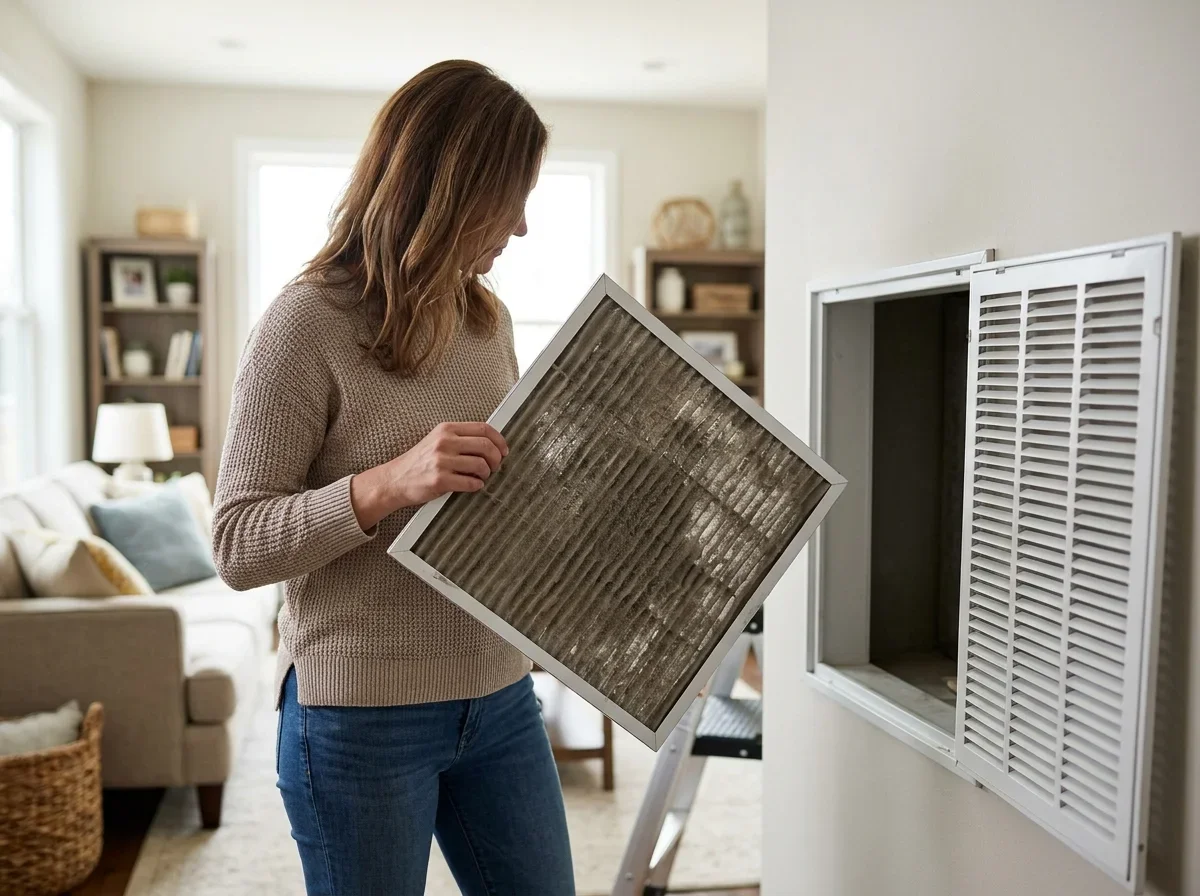
- Pull the air filter and replace it if it's dirty.
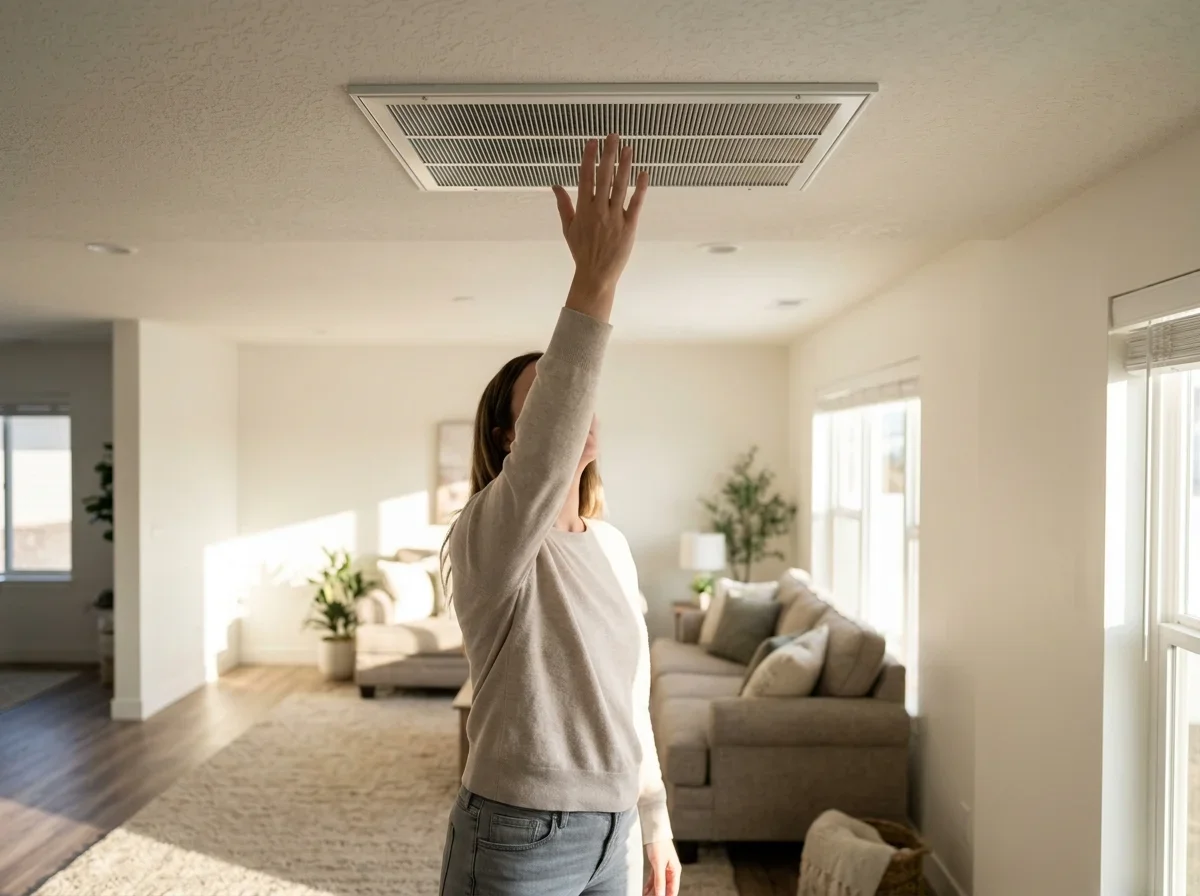
- Confirm the supply vents are open.
- Look at the outdoor unit and check the breaker.
Thermostat settings
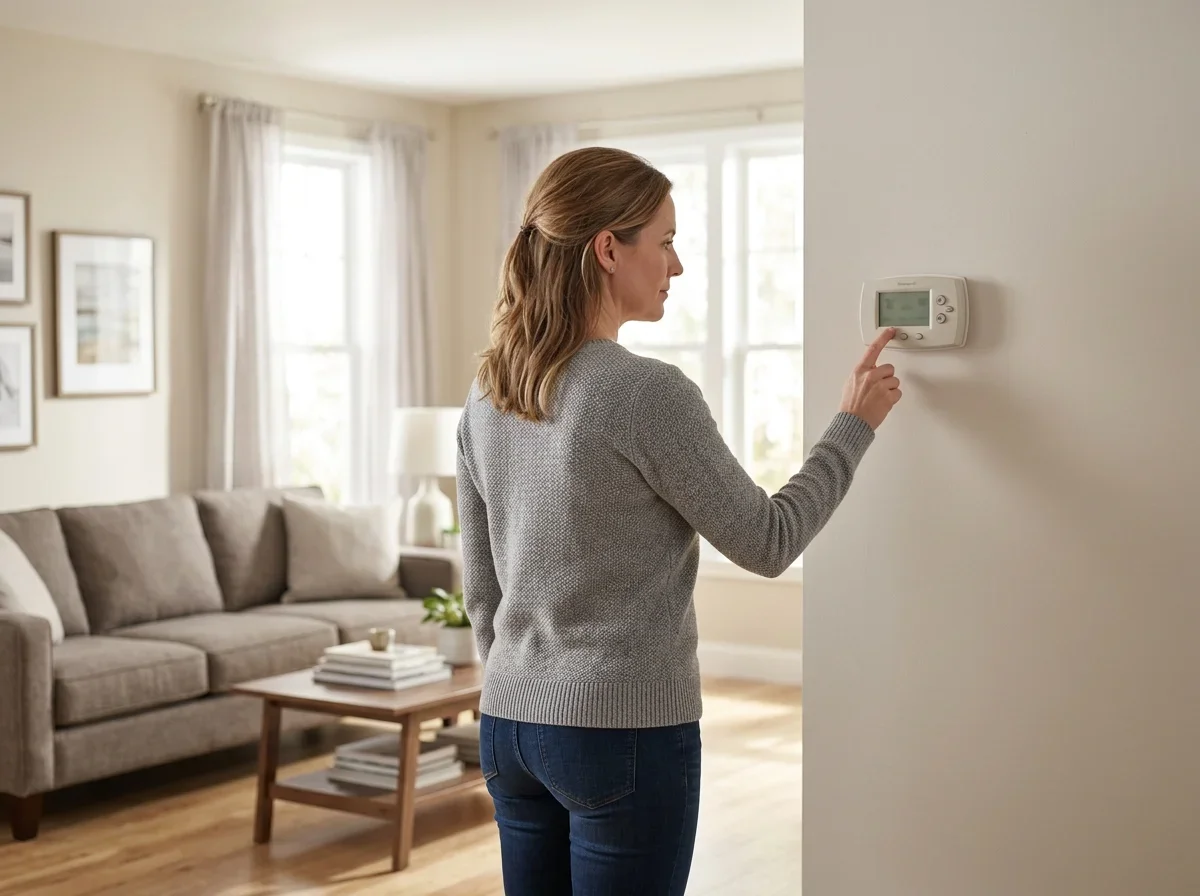
Make sure the mode is Cool and the setpoint is below the current room temperature. Replace batteries if your thermostat uses them.
Also check the fan setting. With the fan on "On" instead of "Auto," the blower keeps pushing room-temperature air through the vents between cooling cycles.
Air filter
A clogged filter chokes airflow and can freeze the indoor coil. The system may blow cold at first, then turn warm as ice builds.
Swap in a clean filter, with the arrow pointing in the direction of airflow. Our guide on how often to change your AC filter in Phoenix homes covers timing for dusty desert conditions.
Breaker and outdoor unit
Go outside and listen. Is the fan spinning? Is there a hum from the compressor? Clear leaves and debris from around the unit, but never open the panels or spray the electrical compartment.
If the HVAC breaker has tripped, reset it once. If it trips again, stop and call a technician.
After a power cycle, many compressors deliberately wait a few minutes before restarting to protect themselves. That pause is normal.
Pro tip
After resetting a breaker or changing the thermostat, give the system a few minutes before deciding it's still broken.
| Symptom | Likely cause | Homeowner check | DIY or technician |
|---|---|---|---|
| Thermostat not on Cool | Wrong mode or fan on "On" | Set to Cool and Auto, lower the setpoint | Safe DIY |
| Dirty filter | Restricted airflow | Inspect and replace the filter | Safe DIY |
| Tripped breaker | Electrical overload or failing part | Reset once, then watch | Call a licensed tech if it trips again |
| Outdoor fan not running | Capacitor, motor or contactor fault | Look and listen from a distance | Call a licensed tech |
| Ice on coil or line | Airflow problem or low charge | Switch to Fan only to thaw | Call a licensed tech if it returns |
| Weak cold air, long run times | Dirty coil, duct leaks or low refrigerant | Check filter, vents and outdoor coil | Call a licensed tech |
| Humming or clicking outside | Failing capacitor, contactor or compressor | Turn the system off | Call a licensed tech |
Why is my AC running but not cooling?
A working indoor blower can make the whole system look fine. Do a quick sort at the outdoor unit.
If the indoor fan blows but the outdoor fan is silent, suspect a power, capacitor or contactor problem. That's a job for AC coil, fan motor and condenser repair, or a look at the AC fan not spinning guide.
If both fans run but the air is only weakly cool, think airflow or refrigerant.
How it works
Sorting the problem at the outdoor unit
Step 1: Indoor fan blows
The system looks fine from inside
Step 2: Check the outdoor fan
Step 3: Outdoor fan silent
Suspect a power, capacitor or contactor problem
Step 4: Both fans run, air weakly cool
Think airflow or refrigerant
Ice and ducts
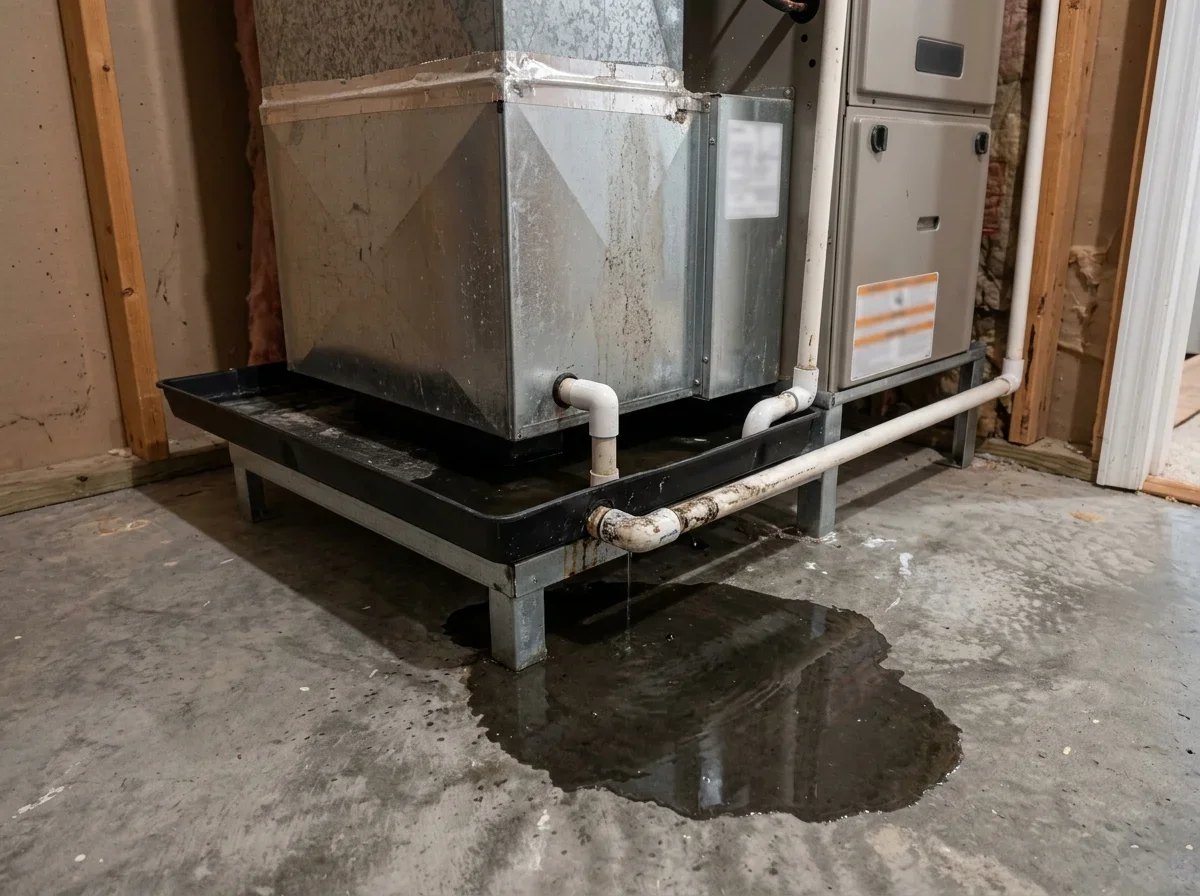
If you see ice on the indoor coil or the copper line, turn the system to Fan only so it can thaw. Don't chip at it. Read why your AC is freezing up before restarting.
Leaky or disconnected ducts are another suspect. Summer attic air is far hotter than your living space, so a gap in a supply duct can deliver warm air even when the equipment works. Ductwork repair and sealing fixes that.
How the parts connect
Where warm air can come from
Air filter
A clog chokes airflow
Indoor coil
Can ice up
Supply ducts
Leaks pull in hot attic air
Outdoor fan
Compressor
Humming or tripping points to failure
Refrigerant charge
Low charge means a leak
Could low refrigerant or a bad compressor be the cause?
Yes, but this is where DIY stops. Refrigerant isn't consumed like fuel, so a low charge means a leak. The EPA advises having a technician find and repair leaks rather than simply topping off a leaking system.[5]
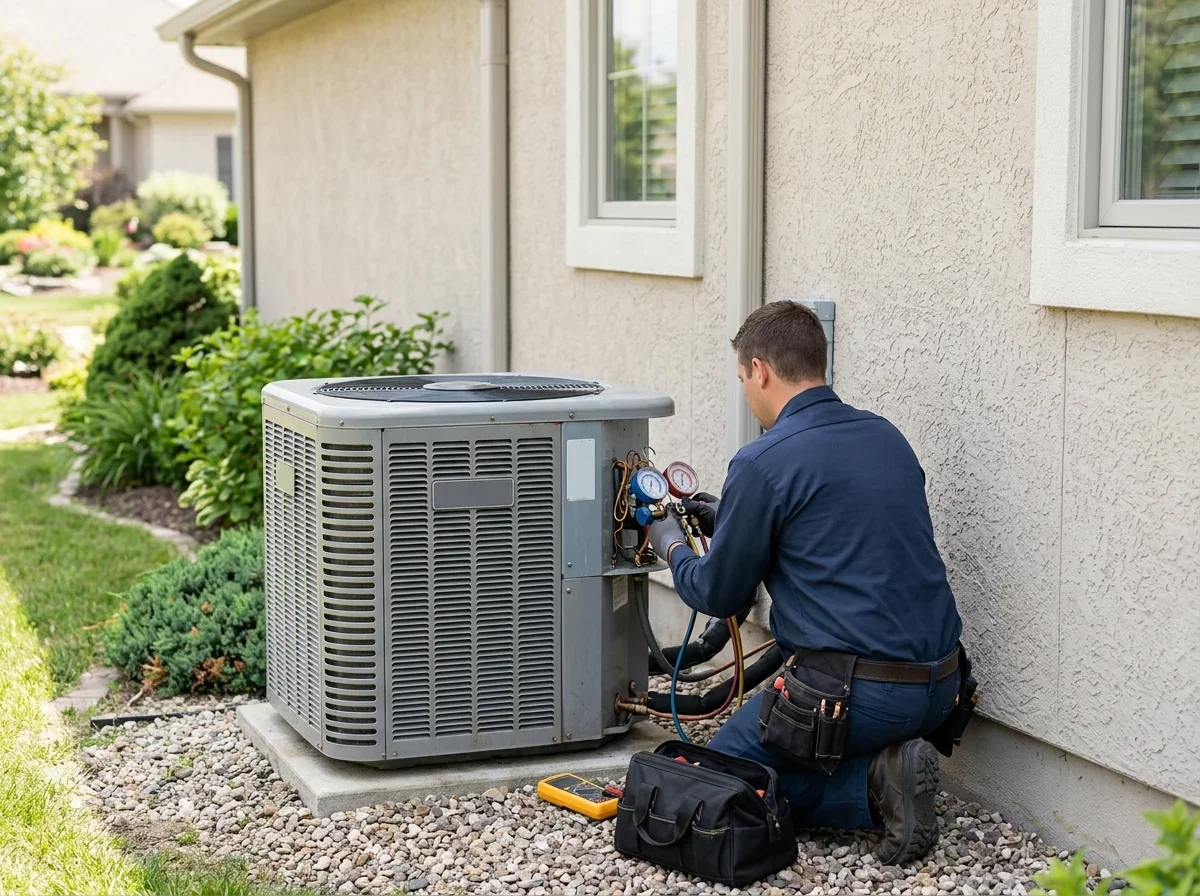
You can't read the level without gauges, and only Section 608-certified technicians may service stationary AC equipment with non-exempt refrigerants.[4] The rules cover handling, recovery and leak repair.[3]
Our recharge kit vs. pro guide explains the tradeoff, and AC refrigerant recharge and leak repair is the service to look for.
Humming, a tripped breaker, or an outdoor unit that sounds like it's trying and failing all point toward compressor and capacitor replacement. Ask for a written diagnosis that names the faulty part.
Key takeaways
- Low refrigerant means a leak
- You can't read the level without gauges
- Only Section 608-certified technicians may service non-exempt refrigerants
- Humming or a tripped breaker points toward the compressor or capacitor
Why does my AC blow cold, then warm?
Intermittent cooling has a few usual suspects: a coil that ices and thaws, a compressor or fan motor overheating, or a relay or control board failing under load.
With summer highs around 106°F, a dirty condenser coil can force high-pressure shutoffs on the hottest afternoons. Cold in the morning and warm by late afternoon fits that pattern.
Log it for your technician
Write down three things:
- The time of day it turns warm
- How many minutes the system ran before that happened
- Whether you saw ice on the coil or line
When should I call a Phoenix AC technician?
Stop and call if you see ice that keeps returning, smell burning, have repeated breaker trips, see an outdoor fan that won't spin, or suspect a refrigerant leak.
Service gets tight in May and June and after monsoon storms. If it's already a crisis, see what to do when your AC stops cooling in a heat wave.
Hire a contractor with an active Arizona Registrar of Contractors license in an HVAC class such as R-39, R-39R or CR-39.[1][2] Check the record at roc.az.gov and read the before-you-hire guidance. Our walkthrough on verifying an HVAC contractor's license shows the steps.
A license doesn't guarantee insurance, so ask for proof of coverage, including liability. Also ask whether technicians hold EPA Section 608 certification.
Get the license number in a written contract, and don't pay in cash.
FAQ: AC blowing warm air
How do I check my AC coolant level?
You can't, not safely. Reading refrigerant takes gauges, and handling it requires EPA Section 608 certification.[4]
If you suspect low charge, you likely have a leak that needs professional repair.
What is the 3 minute rule for AC?
Many systems delay the compressor for a few minutes after power is cut or the thermostat is changed, to protect it. Confirm the exact delay in your manufacturer's documentation.
What are signs of a bad AC compressor?
Common signs include humming or clicking outside, a tripped breaker, and an outdoor unit that runs while the air stays warm.
How do I fix my AC not blowing cold air?
Set the thermostat to Cool and Auto, replace the filter, open the vents, clear debris from the outdoor unit and reset a tripped breaker once. If cooling doesn't return, book a technician.
Why is my AC fan running but not cooling?
The indoor fan can run while the outdoor compressor is off. Check whether the outdoor fan is spinning.
If it isn't, suspect a power, capacitor or contactor fault. If it is, suspect airflow, ducts or refrigerant.
Why is my central AC blowing warm air but the compressor is running?
Likely culprits are a dirty condenser coil, a frozen evaporator coil, leaky attic ducts or low refrigerant from a leak. Log when it happens, then book AC repair with a licensed Phoenix technician.
Questions
- Arizona Registrar of Contractors. "License Classifications." https://roc.az.gov/license-classifications. Accessed October 16, 2026.
- Arizona Registrar of Contractors. "Arizona Registrar of Contractors License Classification Requirements." https://roc.az.gov/sites/default/files/2022-07/License%20Classification%20Requirements_6.8.20_0.pdf. Accessed October 16, 2026.
- U.S. Environmental Protection Agency. "Managing Refrigerant in Stationary Refrigeration and Air-Conditioning Equipment." https://www.epa.gov/section608/managing-refrigerant-stationary-refrigeration-and-air-conditioning-equipment. Accessed October 16, 2026.
- U.S. Environmental Protection Agency. "EPA’s Refrigerant Management Requirements: What Technicians Need to Know." https://www.epa.gov/sites/default/files/2016-09/documents/608_fact_sheet_technicians_0.pdf. Accessed October 16, 2026.
- U.S. Environmental Protection Agency. "Homeowners and Consumers: Frequently Asked Questions." https://19january2021snapshot.epa.gov/ods-phaseout/homeowners-and-consumers-frequently-asked-questions_.html. Accessed October 16, 2026.