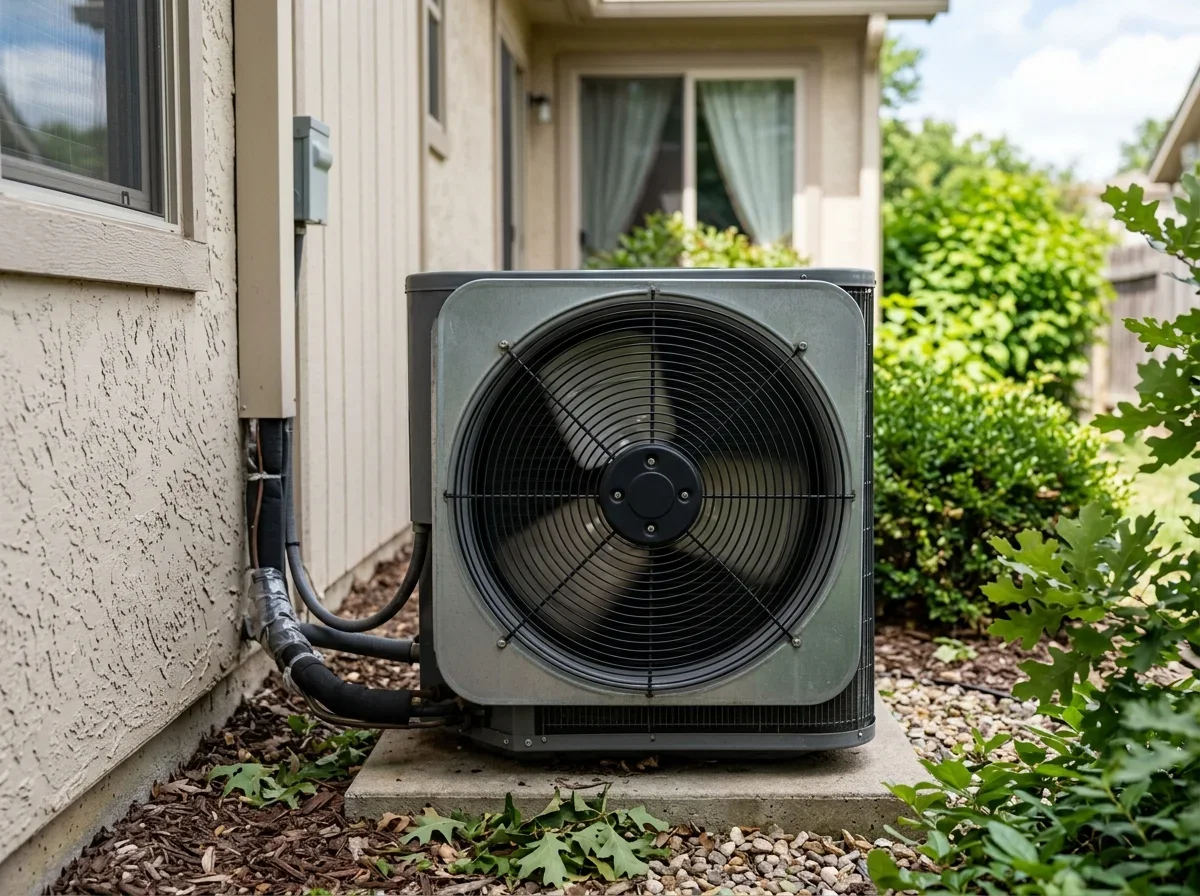
Why is my AC freezing up?
Your AC freezes when the evaporator coil gets too cold to absorb heat from the air passing over it. Moisture on the coil then turns to ice. The usual triggers are restricted airflow or low refrigerant.
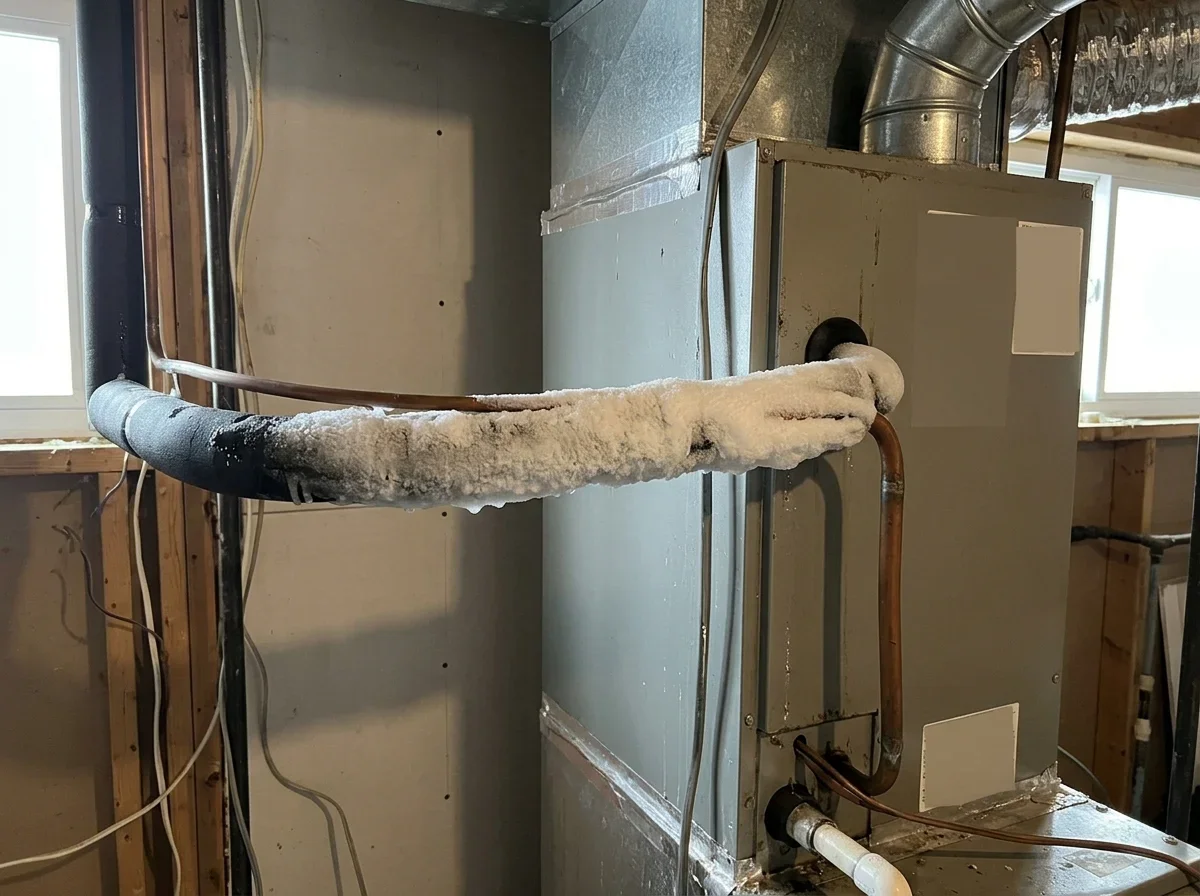
Ice may show up on the coil itself (behind the access panel), on the copper suction line, or on the outdoor unit. Ice on the outdoor line usually means the indoor coil is already frozen solid.
Work through these checks in order:
- Is the filter clogged, or are vents and returns blocked? That's a cheap DIY fix.
- With a clean filter, is airflow weak or is the indoor fan silent? That points to the blower, capacitor or blower wheel, which needs a licensed pro.
- Does airflow feel normal but the ice keeps coming back? Or do you see oil stains or hear hissing? Suspect low refrigerant or a leak, which needs a certified technician.
| Likely cause | What you notice | DIY check | Typical fix |
|---|---|---|---|
| Dirty filter or blocked vents | Weak airflow, ice on coil or line | Swap the filter, open all vents, clear returns | DIY: replace filter, reopen vents |
| Failing blower motor or capacitor | Air barely moves with a clean filter, or indoor fan is silent | Listen and feel at several vents | Licensed pro: motor, capacitor or blower wheel repair |
| Low refrigerant / leak | Normal airflow but ice returns, hissing, oil stains | None safe to do yourself | Licensed, EPA-certified pro: leak test and repair |
| Dirty evaporator coil or duct restriction | Weak airflow at some or all vents | Compare airflow room to room | Usually a pro: coil cleaning, duct repair |
How do I thaw a frozen AC safely?
- Switch the thermostat from cool to off so the compressor stops.
- Set the fan to on (only if the blower is running normally) so room-temperature air moves across the coil.
- Put towels around the air handler and check the drain pan and condensate line.
- Wait until the ice is completely gone before you test the system.
Never chip or scrape the coil, and skip hair dryers and heat guns. See our guide to AC leaking water if the pan overflows.
How it works
How to thaw a frozen AC
Step 1: Thermostat to off
The compressor stops
Step 2: Fan to on
Only if the blower runs normally
Step 3: Towels, drain pan and condensate line check
Step 4: Wait for the ice to be completely gone
Should I turn off the AC if it's not cooling?
Yes. Running the compressor against an iced coil can stress the system. Turn cooling off and let the coil thaw first.
How long should I run the fan to defrost it?
A full thaw can take a while, and the time depends on how much ice has built up. Don't restart cooling until the ice is fully gone.
Dirty filter and blocked airflow: the easiest cause to check
Start with the filter. Pull it out and hold it up to the light. If you can't see through it, replace it. Our guide on how often to change your AC filter in Phoenix homes covers timing.
Pro tip
If you can't see light through the filter, replace it, then open every supply vent and clear every return grille before restarting.
Then check the rest of the airflow path. Closed supply registers, furniture over a return grille, and a dirty evaporator coil all restrict flow. Leaky or crushed ducts can do the same. If you suspect worn attic ducts, look at ductwork repair, sealing and replacement.
Blower and fan problems that cause a frozen coil
A system can keep blowing air and still freeze. If the blower motor is failing, the capacitor is weak, or the blower wheel is caked with dirt, not enough air crosses the coil.
After thawing, run fan-only mode and compare airflow at several vents. Weak flow across the house suggests a filter, blower, coil or duct issue. Normal flow followed by fast refreezing points toward refrigerant trouble.
If the fan isn't spinning at all, see AC fan not spinning.
Replacing a blower motor or wheel is licensed work, and AC coil, fan motor and condenser repair covers it. See also the capacitor replacement cost guide.
Will low refrigerant cause AC to freeze up?
Yes. A low charge drops the pressure and temperature inside the evaporator coil, so the coil gets cold enough to freeze moisture.
Refrigerant circulates in a sealed circuit, so a low charge means a leak somewhere. Topping it off without finding the leak buys a few cool days at best. Federal rules also prohibit knowingly releasing refrigerant during service[2], and certification is required when a repair could reasonably be expected to open the refrigerant circuit[3]. Technicians must also follow set recovery and evacuation practices[4].
That's why DIY recharging isn't a good idea. For the trade-offs, read AC recharge kits vs. a pro recharge.
A pro should leak-test, repair the leak, and then charge the system. Our refrigerant recharge and leak repair page explains what that involves. If the unit also turns on and off in short bursts, read about AC short cycling.
When to call a licensed Phoenix HVAC contractor
Call if ice returns after a thaw, if the filter is clean and the vents are open, or if you see oil stains or hear hissing.
Before you hire, check the contractor's license in the ROC Contractor Search[1]. Confirm it's active and in an HVAC class such as R-39, R-39R or CR-39. Our guide to verifying an HVAC contractor's license walks through it.
Good questions to ask:
- Did you check airflow (filter, blower, coil, ducts) before touching refrigerant?
- If refrigerant is low, will you leak-test instead of just topping off?
- Are your technicians EPA 608 certified?
- Can you show proof of insurance?
- Who pulls a permit if one is needed?
For more, see questions to ask before hiring.
Checklist
Questions for your HVAC contractor
0 of 5 ticked
Tick them off as you go. Nothing is saved or sent.
Frequently asked questions
How do I stop an air conditioner from freezing up?
Turn cooling off, run the fan, and let the ice melt completely. Then replace a dirty filter, open every vent and clear the returns. See the airflow check.
Should I turn off AC if it's not cooling?
Yes, especially if you see ice. Details are in the thaw section.
How long to run a fan to defrost an AC?
A full thaw can take a while, and the time depends on how much ice has built up. Wait until all the ice is gone before restarting cooling.
Will low freon cause AC to freeze up?
Yes. Low charge lowers coil pressure and temperature, which causes ice. It points to a leak that needs repair by a certified technician. See the refrigerant section.
Will a frozen AC fix itself?
The ice will melt if you shut the system off, but the problem comes back when the cause is still there.
Why is my outside AC unit frozen in summer?
Ice on the outdoor unit often means the indoor evaporator coil is already frozen. Shut the system down, let it thaw, and have a technician check airflow and refrigerant. See where ice shows up.
Questions
- Arizona Registrar of Contractors. "Arizona Registrar of Contractors — Contractor Search." https://roc.az.gov/contractor-search. Accessed October 16, 2026.
- U.S. Environmental Protection Agency. "EPA’s Refrigerant Management Requirements — What Technicians Need to Know." https://www.epa.gov/sites/default/files/2016-09/documents/608_fact_sheet_technicians_0.pdf. Accessed October 16, 2026.
- U.S. Environmental Protection Agency. "EPA’s Refrigerant Management Program Questions and Answers for Section 608 Certified Technicians." https://www.epa.gov/section608/epas-refrigerant-management-program-questions-and-answers-section-608-certified. Accessed October 16, 2026.
- U.S. Environmental Protection Agency. "Stationary Refrigeration Service Practice Requirements." https://www.epa.gov/section608/stationary-refrigeration-service-practice-requirements. Accessed October 16, 2026.
- U.S. Environmental Protection Agency. "Stationary Refrigeration: Prohibition on Venting Refrigerants." https://www.epa.gov/section608/stationary-refrigeration-prohibition-venting-refrigerants. Accessed October 16, 2026.
- U.S. Environmental Protection Agency. "Stationary Refrigeration Leak Repair Requirements." https://www.epa.gov/section608/stationary-refrigeration-leak-repair-requirements. Accessed October 16, 2026.