Does replacing an AC need a permit in Phoenix?
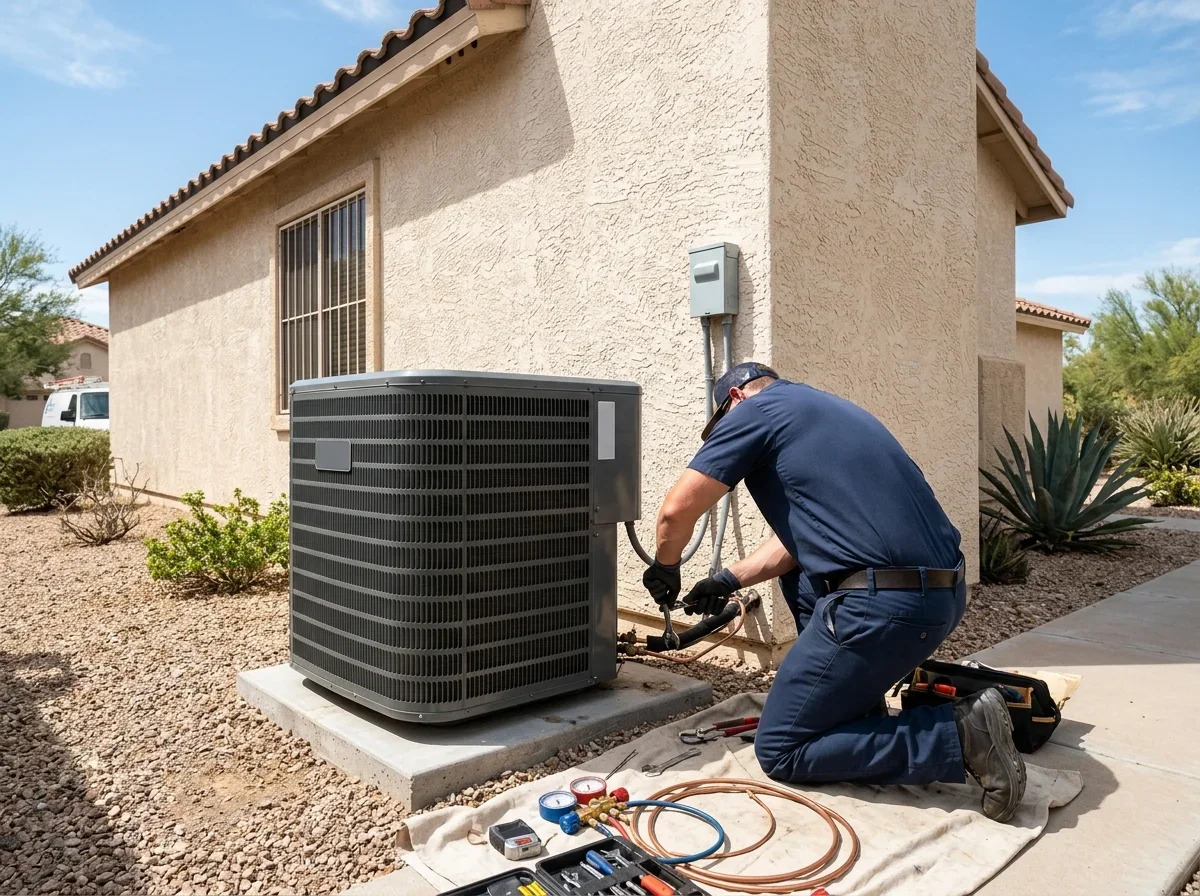
In Phoenix, replacing an existing air conditioner generally needs no permit as long as the work does not increase the unit's size or capacity and does not change its location.[1] Scottsdale requires a Minimum Mechanical Permit for the same job, and Mesa and unincorporated Maricopa County use different tests. Check the rule for your city before you assume anything.
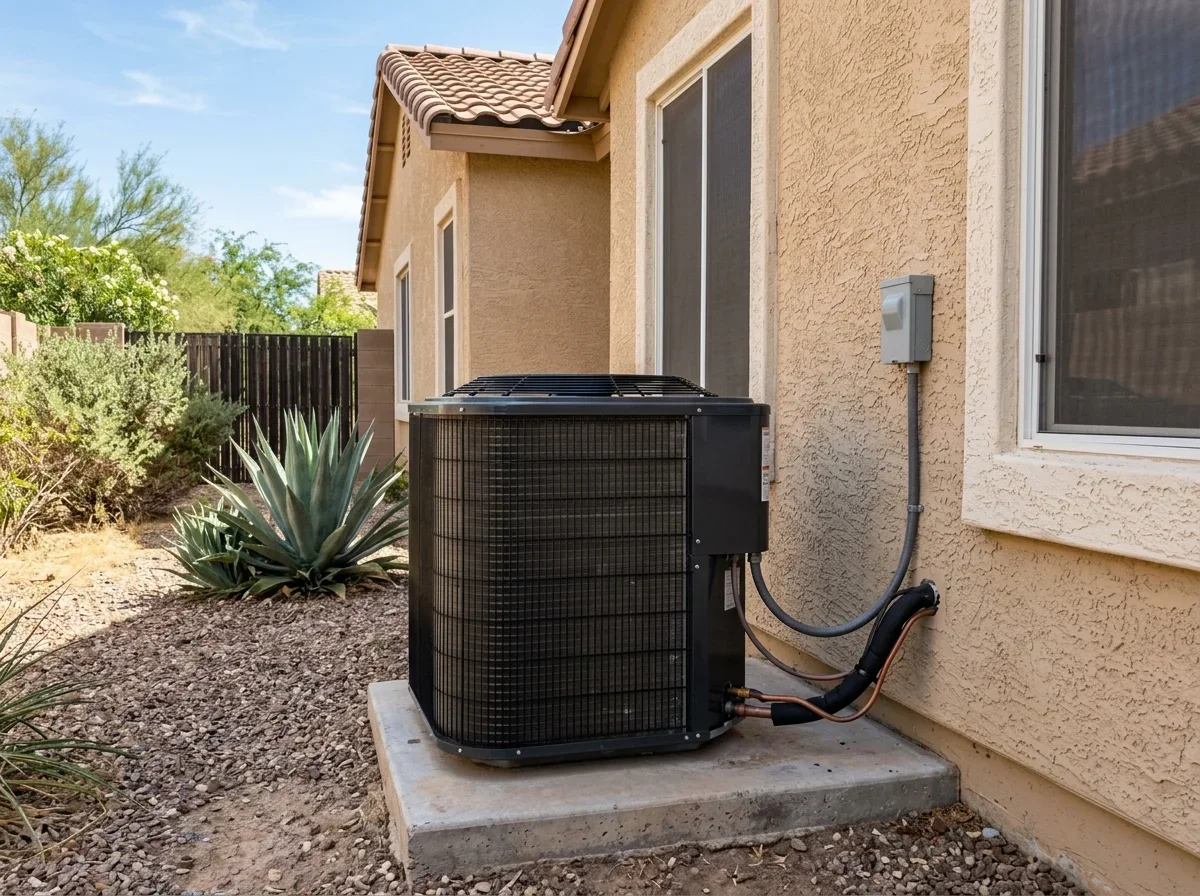
Why contractor pages say "yes" and Phoenix says "no": National guides and many contractor sites treat any HVAC swap as permit work, because that is true in a lot of U.S. cities. The City of Phoenix Planning and Development Department (PDD) lists replacement of an existing air conditioner, without an increase in size, capacity or location, among work that does not require a permit.[2]
Phoenix's exemption is narrow. It covers a true like-for-like replacement, and the moment the job grows, the answer can change.
Decide
Does a Phoenix AC swap need a permit?
What changes with the new unit?
If Nothing: same size, capacity and location
then: No permit under the Phoenix exemption
If Larger size or higher capacity
then: Ask PDD about a permit
If New location
then: Ask PDD about a permit
Did the 2025 code update change this?
Phoenix adopted amendments to the International Mechanical Code (Ordinance G-7397). Nothing in the PDD pages cited here says those amendments created a permit requirement for like-for-like replacement.
Confirm with the PDD permit desk or ask your contractor to state in writing what they're relying on. Our AC Replacement and Installation page covers the process.
How do permit rules differ in Mesa, Scottsdale and Maricopa County?
The same swap gets four different answers across the Valley. Rules were last checked in October 2026 and can change, so confirm with the city before work starts.
| Jurisdiction | Permit for like-for-like replacement? | What triggers a permit | Where to apply |
|---|---|---|---|
| City of Phoenix | No, if size, capacity and location stay the same | An increase in unit size or capacity, or a change in location | Planning and Development Department (PDD) at phoenix.gov |
| City of Mesa | No, if the new unit uses the same or less electricity | Changed electrical connections | Development Services, Permit Services |
| City of Scottsdale | Yes. A Minimum Mechanical Permit covers like-for-like replacement of an AC or air handler | Mechanical Permits cover furnace, refrigeration and AC equipment (except portable or window units) | Planning & Development Services, SPUR portal |
| Unincorporated Maricopa County | Like-for-like A/C, evaporative cooler and HVAC replacement can be web-issued online | New or upgraded ground-mounted units are "Non-Technical"; roof-mounted units get Technical/Standard Review | Maricopa County Planning & Development |
The county only handles unincorporated areas, so a home with a county mailing address may still sit inside a city. Tempe, Chandler, Gilbert and Glendale aren't covered here. Check each city's official permit page, or call its permit office.
What counts as a bigger or different system?
Phoenix tests physical change: size, capacity and location.[1] Mesa tests electrical load. Scottsdale has no like-for-like exemption, and the county sorts by how the unit is mounted.
Say you swap a ground-level condenser for a new one on the same pad. In Phoenix, that's the exemption. If the new unit changes the electrical connections, Mesa would want a permit. In Scottsdale, it's a Minimum Mechanical Permit either way.
Side by side
Same swap, two answers
Phoenix
- Tests size, capacity and location
- No permit if all three stay the same
Scottsdale
- No like-for-like exemption
- Minimum Mechanical Permit required
Flags worth raising with your contractor
Some changes should always prompt the permit question:
- Moving the condenser to a new spot on the property
- Going from a ground-mounted unit to a roof-mounted one
- Changing the electrical connections or the electrical load
- Stepping up to a larger or higher-capacity system
How each city defines "capacity" isn't spelled out on the pages cited here, so ask the permit office. Use our AC sizing and cost guide if you're weighing a size change.
Why code still matters without a permit
The Phoenix amendments to the mechanical code bar nonmetallic condensate piping in direct sunlight, such as on a rooftop. A permit exemption doesn't exempt the install from the code. A good contractor builds to it anyway.
Pro tip
Ask the permit office how it measures capacity for your address before you compare quotes, so every contractor prices the same scope.
Who pulls the permit, and does the contractor need a license?
The Arizona Registrar of Contractors (ROC) licenses HVAC contractors, and cities handle permits. The residential air-conditioning and refrigeration class is R-39, and the dual commercial and residential class is CR-79.[3]
How the parts connect
Licensing and permits are separate
Arizona ROC
Licenses HVAC contractors (R-39, CR-79)
City permit office
Handles permits where required
Contractor license number
Collected by a city that requires a permit
Arizona generally requires a license when the total project cost exceeds $1,000 or when the work requires a permit from the local municipality.[5] The handyman exemption also doesn't extend to work involving fuel connections.
Ask the permit office directly, and confirm your contractor's class on the ROC license lookup. Our guide to Arizona ROC HVAC licensing goes deeper.
What should you ask your contractor about permits?
The ROC tells homeowners to verify the license and classification and to confirm in the contract who is responsible for permits.[4] Before you sign, ask:
- Is a permit needed in my city, and what is that based on?
- Who pulls it, and under whose license number?
- Will the permit and the inspection sign-off be written into the contract?
- What is your ROC license number and class (R-39, R-39R or CR-39)? Will it appear in the contract with start and completion dates?
- Can I see proof of insurance?
Run the license through the ROC Contractor Search yourself. Our walkthrough on verifying an HVAC contractor's license covers the steps, and the pre-hire question list adds more.
The ROC requires workers' compensation, but a license doesn't guarantee other coverage, so request certificates.[5] See also what HVAC credentials mean.
Why does the permit matter for rebates and resale?
A permit creates an inspection record, and that record can support resale and rebate documentation.[4] In a like-for-like swap in Phoenix, keep your invoice and equipment details. Read the current program pages in our guides to SRP AC rebates and APS rebates for AC.
Unpermitted work can also complicate a sale. If a buyer's inspector or the city flags it, you may be asked to document or correct it.
Key takeaways
- Phoenix generally needs no permit for a true like-for-like swap
- Scottsdale requires a Minimum Mechanical Permit for the same job
- Changes in size, capacity, location or electrical load can change the answer
- Arizona generally requires a license when a project exceeds $1,000 or needs a local permit
- Keep your invoice and equipment details for rebates and resale
Frequently asked questions
What are the laws regarding air conditioning in Arizona?
Arizona has no single statewide residential AC permit rule. Permits are set locally, and the ROC licenses the contractors who install systems.[3]
What renovations do I need a permit for in AZ?
It depends on the city or county. Start with your city's permit office, and note that Arizona generally requires licensing when work needs a local permit.[5]
Do you need a permit to replace a water heater in Arizona?
That's outside the HVAC scope of this page, and it also varies by city.
Does a like-for-like AC replacement need a permit in Scottsdale?
Yes. Scottsdale requires a Minimum Mechanical Permit for like-for-like replacement of an AC or air handler in the same location, applied for through the SPUR portal.
Can an unlicensed handyman replace my AC in Arizona?
Generally not. Licensing is required when the total project exceeds $1,000 or when the work requires a local permit.[5]
What is the typical cost to replace an AC unit in Phoenix, Arizona?
Quotes vary with system size, home layout, ductwork condition and electrical needs. See our AC replacement cost guide or the repair or replace comparison.
Questions
- City of Phoenix Planning and Development Department. "Residential Projects." https://www.phoenix.gov/administration/departments/pdd/residential-building/resident-plan-reviews.html. Accessed October 16, 2026.
- City of Phoenix Planning and Development Department. "Nonpermitted Construction." https://www.phoenix.gov/content/dam/phoenix/pddsite/documents/trt/external/dsd_trt_pdf_00576r.pdf. Accessed October 16, 2026.
- Arizona Registrar of Contractors. "License Classifications." https://roc.az.gov/license-classifications. Accessed October 16, 2026.
- Arizona Registrar of Contractors. "Before You Hire a Contractor." https://roc.az.gov/before-hire. Accessed October 16, 2026.
- Arizona Registrar of Contractors. "Contracting in Arizona? Here’s What You Need to Know!." https://roc.az.gov/news/contracting-arizona-heres-what-you-need-know. Accessed October 16, 2026.