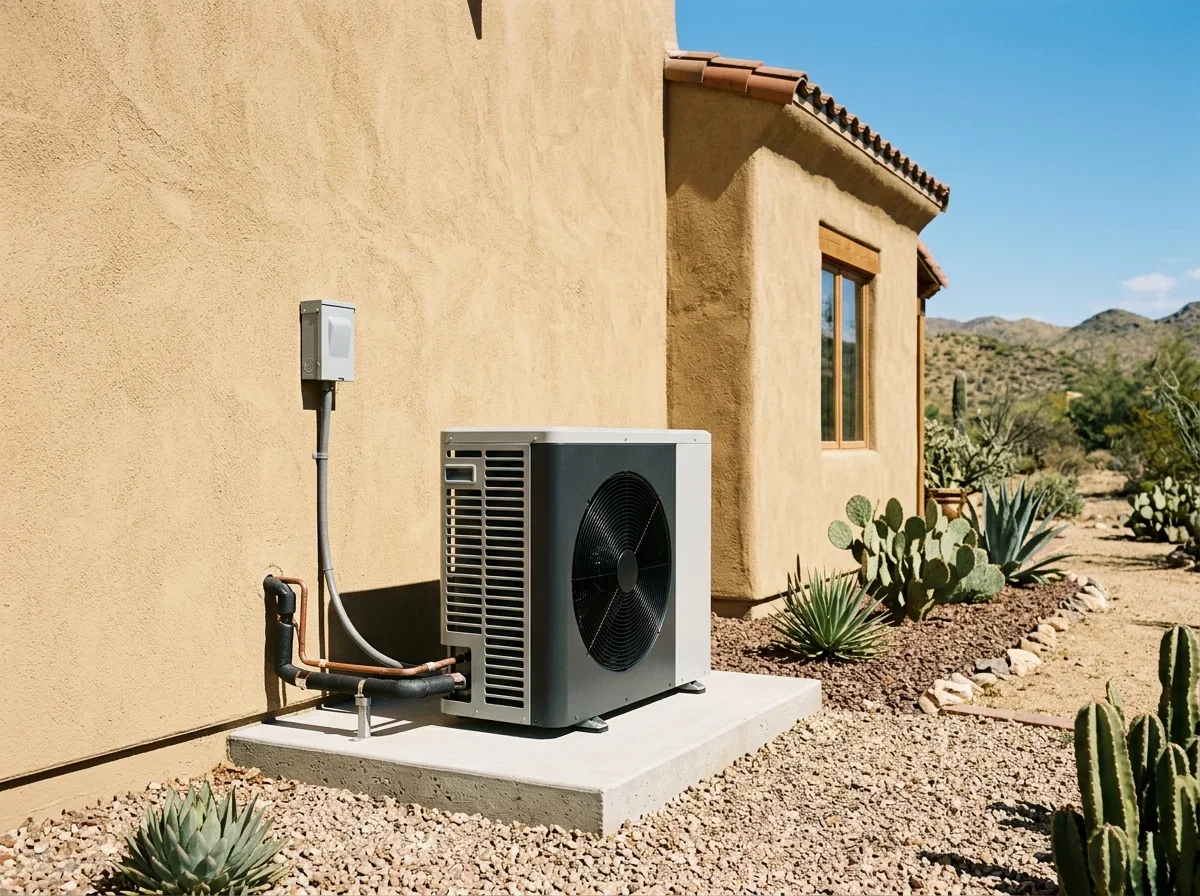
In the Valley, you're choosing a winter heating source, not a cooling system. A heat pump heats and cools with one electric unit. A central AC cools only, so it pairs with a gas furnace for heat.
Your home's furnace age, ducts and electrical capacity decide which fits better.
| Heat pump | Central AC + gas furnace | |
|---|---|---|
| Summer cooling | Cools with an outdoor unit, indoor coil and ducts | Cools the same way, with the same basic parts |
| Winter heating source | Electricity, by moving heat indoors | Natural gas burned in the furnace |
| Winter running cost drivers | Local electric rates and system efficiency | Local gas rates and furnace efficiency |
| Equipment count | One system handles both seasons | Two major systems to maintain and eventually replace |
| Comfort feel in winter | Gentler, milder air with longer, steadier run times | Hotter air at the registers and faster warm-up |
| Fit for Phoenix homes | Strong when both systems are due for replacement | Strong when the furnace is healthy and gas heat is preferred |
What is the difference between a heat pump and a central AC?
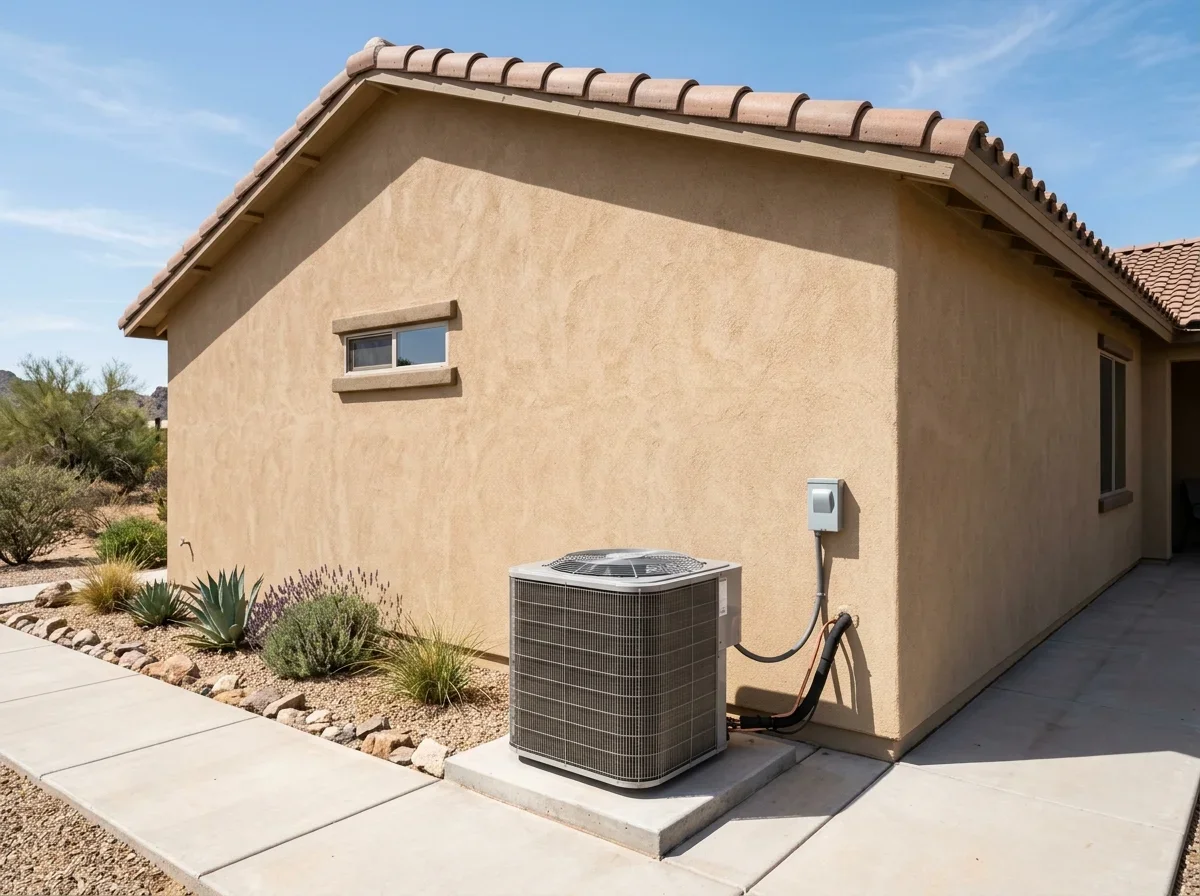
The cooling side is nearly identical. Both use an outdoor unit, an indoor coil and a duct system to pull heat out of your home. A heat pump adds a reversing valve, so it can run the cycle backward and move heat in instead of out.[1]
That's the whole difference. A heat pump is an air conditioner that can also heat.
Side by side
Heat pump versus central AC with gas furnace
Heat pump
- Heats and cools with one electric unit
- Reversing valve moves heat in
Central AC + gas furnace
- Cools only
- Gas furnace provides the heat
Replacing a heat pump isn't always an outdoor-unit swap, either. It may call for a compatible air handler, controls and electrical work. For a closer look at what a job involves, see our heat pump installation and repair page.
How does Phoenix's climate change the comparison?
Cooling dominates here. Phoenix logged 113 consecutive days at or above 100°F in 2024, which broke the 76-day record set in 1993.
Whichever system you pick will spend far more hours cooling than heating.
Key takeaways
- A heat pump is an air conditioner that can also heat
- Cooling dominates in Phoenix, so both options cool the same way
- Winter heating source and running cost are the real difference
- Furnace age, ducts and electrical capacity decide the fit
Why advice from Long Island or Connecticut doesn't transfer
Air-source heat pumps work most efficiently above roughly 30 to 35°F.[2] Cold-climate worries like frequent defrost cycles and heavy reliance on backup electric heat matter where winters sit near or below that range. In the Valley, they rarely come up.
Winters are short and mild, which suits heat pump heating well.
Phoenix's mechanical code (section 309.1, as amended) also requires occupied spaces to have heating and cooling able to hold set indoor temperatures. Heating capacity matters even here, especially if you're removing a furnace.
Heat pump or AC with a gas furnace: which costs less to run?
Compare only the heating season. Summer cooling cost is driven by the same 100°F-plus load either way.
Two ratings help you compare equipment. SEER measures seasonal cooling efficiency, and HSPF measures a heat pump's heating efficiency.[1] Higher numbers mean less electricity per unit of cooling or heat.
Winter cost then comes down to local rates: electricity for a heat pump against natural gas for a furnace. Check current SRP or APS electric rate pages against your gas bill for the heating months.
Utility programs may help offset costs. SRP's residential program covers qualifying central AC, heat pump and mini-split systems and requires Arizona-licensed installation.[5] See our SRP rebate guide for more.
Ask for two itemized quotes, one for AC plus furnace and one for a full heat pump system, covering equipment, labor, electrical work, permits and warranty.
Pro tip
Ask for both quotes on the same scope, including electrical work and permits, so the heat pump and AC-plus-furnace prices compare fairly.
For upfront pricing and switching costs, see heat pump installation cost in Phoenix.
Which one is more comfortable and reliable in the Valley?
Expect a different feel in winter. Heat pump air is warmer than room temperature but gentler than a furnace's. Systems run longer cycles and hold steadier room temperatures.
A furnace warms the registers faster and recovers quickly when you raise the thermostat several degrees.
DOE puts the expected lifetime of an air-source heat pump at about 15 years.[2] Ask installers about warranty terms.
Ducts matter for either choice. DOE says heat pump duct systems should be sized for the larger of the heating and cooling loads, and quality installation requires sealed ducts and adequate airflow.[3][4]
Valley ducts typically run through scorching attics. Have them inspected, and see ductwork repair, sealing and replacement.
Regular service helps either system, so consider AC tune-up and maintenance.
What do licensing and permits look like when you switch?
Hire an ROC-licensed contractor. Arizona's specialty residential classification covers installing and repairing comfort air-conditioning, refrigeration, evaporative cooling, ventilation and heating systems.[6]
Look for an R-39, R-39R or CR-39 license, and verify it with the ROC Contractor Search at roc.az.gov. Our guide to verifying an HVAC contractor's license walks through it.
Permit rules differ by city, and a heat pump swap may change capacity or electrical connections:
| Jurisdiction | Rule for replacement |
|---|---|
| Phoenix | No permit for like-for-like unless size, capacity or location changes |
| Mesa | No permit if the new unit uses the same or less electricity; changing electrical connections needs one |
| Scottsdale | Minimum Mechanical Permit, even for like-for-like |
| Unincorporated Maricopa County | Web-issued permit for like-for-like; roof-mounted units get technical review |
Ask your contractor which rule applies. Tempe, Chandler, Gilbert and Glendale each have their own rules. See permits for AC replacement in the Phoenix area.
Checklist
Before you hire
0 of 4 ticked
Tick them off as you go. Nothing is saved or sent.
So which should you choose?
Match the choice to your situation. This is general guidance, not a savings promise.
- Failing AC, aging furnace: a heat pump replaces both with one system.
- Failing AC, healthy furnace, affordable gas: replace only the AC and keep the furnace.
- Want gas backup and faster recovery: consider dual-fuel, where a heat pump handles normal heating and cooling and the furnace steps in when needed.
- No ducts: look at mini-split installation.
Heat pump vs AC: frequently asked questions
Why don't contractors like heat pumps?
Some contractors simply know gas-furnace-plus-AC systems better. Heat pumps depend on correct sizing, airflow and controls, and poor installs cause the complaints.
What is the lifespan of a heat pump?
DOE cites about 15 years for an air-source heat pump.[2] Ask manufacturers about warranty coverage in desert heat.
What is the lifespan of an air conditioner?
Ask your contractor for the manufacturer's stated figures and warranty terms.
What size heat pump do I need?
Size from a calculated design load, not a rule of thumb or the old unit's size.[2] Ask for a documented Manual J load calculation.
Is a heat pump more efficient than an air conditioner?
For cooling, the two work the same way. The difference is heating, where a heat pump moves heat rather than burning fuel.[1]
Do heat pumps work well in Phoenix winters?
Yes. Winters are mild, and heat pumps do their best work above roughly 30 to 35°F.[2] Expect gentler, steadier heat rather than a furnace's blast.
Questions
- U.S. Department of Energy. "Guide to Home Heating and Cooling." https://www.energy.gov/sites/prod/files/guide_to_home_heating_cooling.pdf. Accessed October 16, 2026.
- U.S. Department of Energy, Building America. "Heating and Cooling Equipment Selection." https://www1.eere.energy.gov/buildings/publications/pdfs/building_america/26459.pdf. Accessed October 16, 2026.
- U.S. Department of Energy, Building Science Education. "HVAC Quality Installation." https://bsesc.energy.gov/energy-basics/hvac-quality-installation. Accessed October 16, 2026.
- U.S. Department of Energy, Building Science Education. "DUCT RETROFIT DECISION GUIDE." https://bsesc.energy.gov/sites/default/files/2024-09/CEE_Duct_Retrofit_Decision_Guide_TRC_01.16.24.pdf. Accessed October 16, 2026.
- Salt River Project. "AC rebates." https://www.srpnet.com/energy-savings-rebates/home/rebates/air-conditioner. Accessed October 16, 2026.
- Arizona Registrar of Contractors. "License Classifications." https://roc.az.gov/license-classifications. Accessed October 16, 2026.